


Long-Distance Riding: Lessons from 1,000 Miles in a Day
A thousand-mile day is won in a garage two weeks earlier, and lost at the fuel pump. / Aug 31, 2026 /
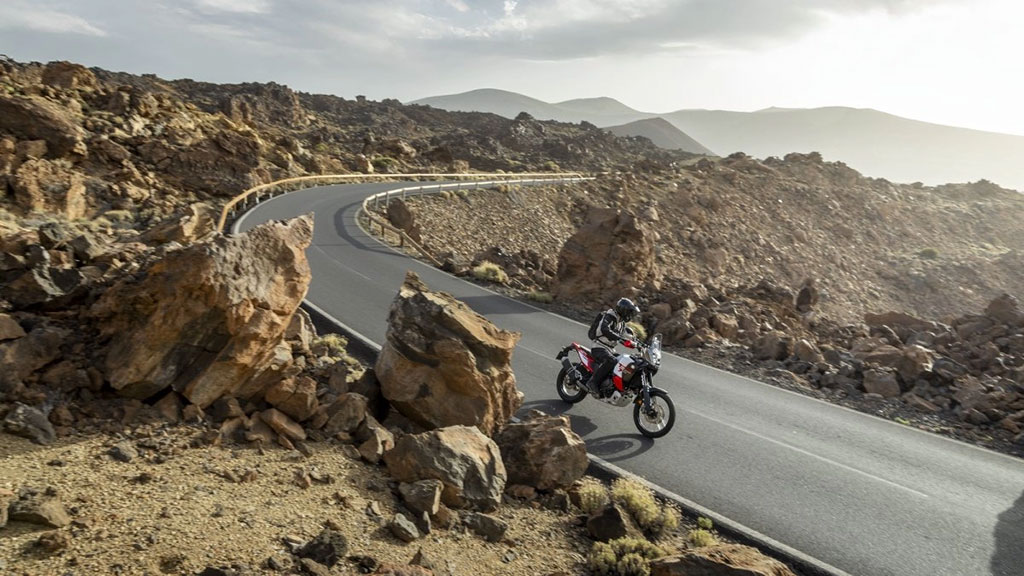
Hour fifteen, somewhere west of Ogallala, and the part that hurts is never the part anybody prepared for. Not the seat. The neck, from holding a helmet upright into wind for nine hours, and a knot between the shoulder blades that arrived around hour eleven and has been getting steadily more insistent since. A thousand miles in a day isn't a test of how tough a rider is, but of how well the day was arranged in advance, and almost everything that goes wrong on a long distance ride was decided weeks earlier in a garage.
Start with the arithmetic, because it is the least intuitive part and it governs everything else. A thousand miles in twenty-four hours works out to an average of about forty-two miles an hour, including every fuel stop, every meal, every roadside stretch and every minute spent looking for a gas station with a working receipt printer. Nobody actually rides forty-two miles an hour. At a seventy-mph cruise the actual riding takes a bit over fourteen hours, which leaves nine and a half for everything else, and that sounds generous right up until it gets divided by eight fuel stops.
That is where the day is won. Eight stops at twelve minutes is ninety-six minutes. Eight stops at twenty-five minutes, which is what happens when the routine gets improvised, is over three hours, and three hours is the entire margin. The riders who finish comfortably aren't faster. They are the ones who fuel, pay, drink, stretch and go in under ten minutes because they have done the same five things in the same order every single time.
The fix is boring, but it works: card in the same pocket every stop, helmet on the mirror not the seat, water before fuel, log written while the tank fills rather than after. Anything requiring a decision at hour eighteen will be decided badly.
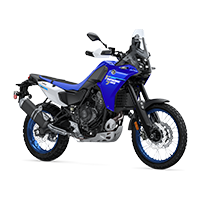
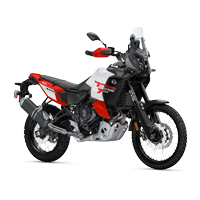
Fuel range is the other half of the same equation, which is why tank capacity matters more on a distance bike than horsepower ever will. The Ténéré 700 World Raid carries twin aluminum tanks holding 6.1 gallons between them, against 4.2 on the standard bike, and that difference isn't really about range. It's about the number of stops, and the number of stops is about time. Yamaha lists it at $12,999, and it also arrives with cruise control that engages in third gear or higher, a 16-way adjustable steering damper, and a flat rally seat that lets a rider move around instead of being locked into one position for fourteen hours.
Movement is the whole fatigue strategy, and it is worth being blunt about why. A rider locked in one position develops the neck knot at hour eleven. A rider who can shift six inches fore and aft, stand on the pegs for thirty seconds every hour, and change hand position on the bar arrives tired, but not injured. Highway pegs, or a bike whose ergonomics allow the legs to move, are worth more at hour sixteen than any electronic aid on the machine.
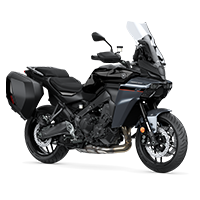
The Tracer 9 solves the same problem from the sport-touring side, at $12,599, with the 890cc CP3 triple and a fairing that does real work. Wind is the underrated tax on a long day: it loads the neck, it costs fuel economy, and it's the reason a naked bike that feels wonderful for two hours feels punitive after ten. An adjustable screen set correctly, so the airflow breaks above the helmet rather than buffeting at chin level, changes the arithmetic of the entire day.
Two pieces of gear outperform everything sold as a farkle. Earplugs are the first, and they aren't optional at highway speed. Wind noise at seventy is loud enough to cause measurable fatigue over fourteen hours, and riders who add plugs to a routine usually report the difference on the first attempt. The second is anything that keeps core temperature stable, because a cold rider is a tense rider and tension is what produces the knot. Heated grips do more for endurance than they do for comfort.
Bike prep is a two-week job, not a two-day one, and the rule is that nothing gets replaced inside the final week. New tires need a few hundred miles on them before anybody should trust them at hour twenty. Chain, oil, brake pads, coolant and a proper tire pressure check all happen with time to discover the problem the service created. Whatever fails on a thousand-mile day was usually installed recently.
Packing is where most riders overcorrect. The weight matters less than the reachability. Everything needed while moving lives somewhere accessible without dismounting, and everything else can be buried. A tank bag with a card, a phone, plugs, sunglasses, ibuprofen and a clear pouch for receipts solves about ninety percent of the friction in a long day.
Which brings up the paperwork, because Iron Butt preparation is a documentation exercise as much as a riding one. The Iron Butt Association wants time-stamped receipts from fuel and business stops, a trip log recording mileage and location, witness forms at the start and finish, and a route map. Riders fail on documentation far more often than on distance, and the usual culprit is a gas pump that won't print a receipt at three in the morning in a town with one open station.
The name on the certificate has a specific origin. The SaddleSore was created by Les Martin at the California Motorcycle Touring Association, who'd spent years running long distance certifications in California, Nevada and Oregon. When Martin retired in 1993, he donated both the SaddleSore and Bun Burner names to the Iron Butt Association rather than let them disappear, and the IBA has certified them ever since from an office in Naperville, Illinois. A thirty-year-old handshake is why the ride has a name.
For anyone riding into Sturgis from a distance rather than trailering, the same arithmetic applies with one addition: arriving the day the rally opens means competing for fuel with half a million other people. Riders who plan the last fuel stop a hundred miles out, before the density starts, save more time than any route optimization will produce.
The last thing is the part nobody puts in a checklist. Somewhere around hour nineteen the ride stops being about the destination and becomes a straightforward negotiation with the body, and the riders who finish are the ones who expected it and built the day around it, rather than being surprised by it.
Everything else is fuel stops and receipts.