

Monday Commute, Saturday Backroad: Ten Yamahas That Do Both
Figuring out which bike actually fits how you ride. / Jun 1, 2026 /
If you’re like most of us, you’ve got room in the garage for exactly one motorcycle, which means it has to pull double duty. It needs to serve as a weekday commuter and also as a fun weekend bike.
That type of bike exists in the Yamaha lineup about ten times over. Choosing exactly the right one depends on how you ride. Rather than dump a spec sheet on you, we'll try to answer one question: which Yamaha should you actually park in your garage?
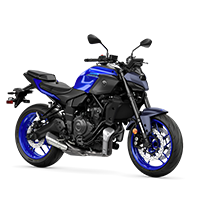
MT-07
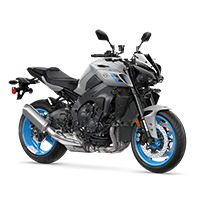
Ideal for: Anyone who put off buying their first real motorcycle for way too long. The CP2 parallel twin is probably the most important engine Yamaha has built in the last fifteen years. You’ll find it powering five different bikes in their lineup. In the MT-07, it comes alive around 4,000 rpm and is backed by a 270 degree crank. The result is an uneven pulse that you can feel in your hands when you’re sitting at a red light.
You can absolutely ride this thing to work every day. The seat sits at 31.7 inches, so most people can plant both feet flat at every stop, and 73 horsepower is plenty for anything you’re going to throw at it on a public road. At 406 pounds it feels almost weightless once you’re moving, and if you push it into a third-gear sweeper you’ll be surprised at how much the chassis is telling you about what the front tire is doing. That kind of feedback used to cost you twice this much, not too long ago.
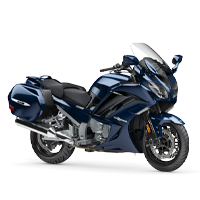
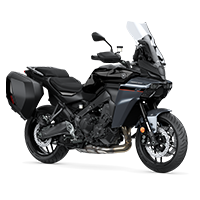
Tracer 9
Ideal for: Big days in the saddle, the kind that start before the sun comes up.
The Tracer 9 will handle an hour each way to the office during the week and 400-mile weekends without ever really complaining about either, which it pulls off thanks to a CP3 triple making 117 horsepower, semi-active KYB suspension that adjusts to whatever’s happening under the wheels, and standard heated grips and cruise control.
Crack the throttle and the midrange just rips, with that signature growl you don’t really get from anything else on the road. Drop it into fifth at 70 on a Monday morning and the whole bike settles into a hum the rest of the way to work. Honestly, this is what happens when a manufacturer finally stops trying to pick a side between sport and touring and just builds the bike that should’ve existed all along.
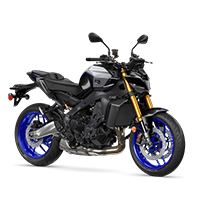
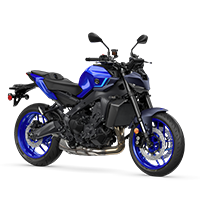
MT-09
Ideal for: When you can’t make up your mind what kind of rider you are.
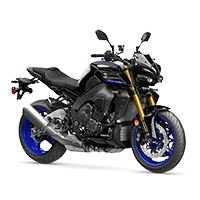
The MT-09 isn't confined to any single category, because it works as a naked bike, it works for canyon days, you can take it to the occasional track day, and it still makes sense as a daily commuter. It does all of this with 117 horsepower pulled from its 890cc CP3 triple, at a curb weight of 417 pounds.
The real surprise for the price is the electronics package, which includes a six axis IMU plus lean-sensitive traction control, slide control, and lift control. Ten years ago, you only got that type of tech on $25,000 superbikes, but now it's standard kit on a midsize naked. And it actually works in real life, too: hit a patch of sand halfway through a corner and the traction light is already flickering before your brain has fully registered what just happened.
XSR900
Ideal for: When you love what the MT-09 does but want it to look like something else.
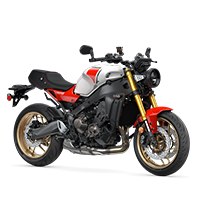
The XSR900 is the bike that nods at the past without getting trapped there. You’re getting the same 890cc CP3 triple as the MT-09 and the R9, but the chassis geometry has been dialed back a touch. It's less aggressive and more road-friendly, and the riding position holds up over longer days in the saddle without beating you up.
On a Tuesday morning somebody at the gas station is going to ask what model year it is on your way into work, and on Saturday you’ll take it down a road you’ve been on a hundred times and somehow have a different ride entirely. The gold tuning fork on the tank, the round headlight, and the stitched seat are not accidental. Yamaha didn’t pick those design cues to look retro for the sake of it, they picked them because they actually mean something to the company’s history.
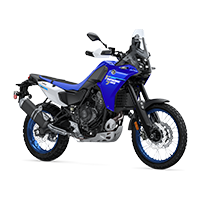
Ténéré 700
Ideal for: When the commute isn't your only travel.
If your Monday is a commute on the interstate but your Saturday is exploring country roads, you’re not in the market for a sport bike, you’re in the market for a Ténéré 700. The CP2 parallel twin makes 72 horsepower in a chassis that’s been deliberately stripped down. It has a 21-inch front wheel, long travel suspension, and a large tank size.
The philosophy behind the Ténéré is that an adventure bike shouldn’t need a dealer technician with a laptop before a long trip. It keeps it simple, and that is exactly why this thing keeps rolling long after the asphalt runs out.
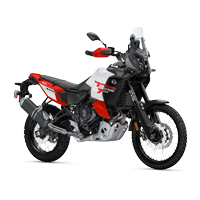
Ténéré 700 World Raid
Ideal for: If you tend to wander.
You’re looking at the same engine and basically the same chassis as the standard Ténéré, but the World Raid has been built for a different kind of trip. The 6.1-gallon tank gives you more range than you’ll realistically ever need between fuel stops, and the fully adjustable KYB suspension can handle more than the regular Ténéré. You also get cornering ABS, cruise control, and a six axis IMU that knows whether you’re on dirt or pavement and adjusts the ride accordingly.
This is the bike where the commute turns into a Saturday, the Saturday turns into a long weekend, and the long weekend somehow turns into a run down to Baja with three of your buddies. Bikes start hitting U.S. dealers in May 2026, amid high demand. The Canadian allocation sold out the same day Yamaha announced it.
YZF-R7
Ideal for: Riding to work all week and getting on a track Saturday morning.
The R7 is one of those rare sport bikes that doesn’t make you regret your life choices on the way to the office every morning, with the CP2 putting out 72 horsepower and a riding position that has plenty of sport in it without crossing into actually painful. The R1’s six-axis IMU is built in here too, running lean-sensitive traction, slide, lift, and brake control, and the third-generation quickshifter takes all the haggling out of corner downshifts so you can just keep your hands where they belong.
It works for the commute because the seat sits lower than just about any other sport bike on the road and the torque comes on smooth enough that fifth-gear lugging through traffic isn’t going to embarrass you, and it works on the weekend because once you actually get on a real road, the bike carves through corners like it weighs fifty pounds less than it does on paper.
YZF-R9
Ideal for: If you miss the R6 and want something that hits the same nerve in its own way.
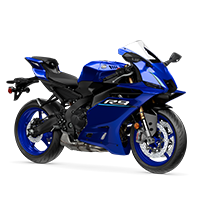
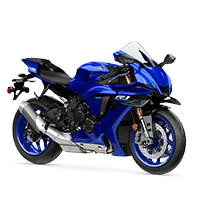
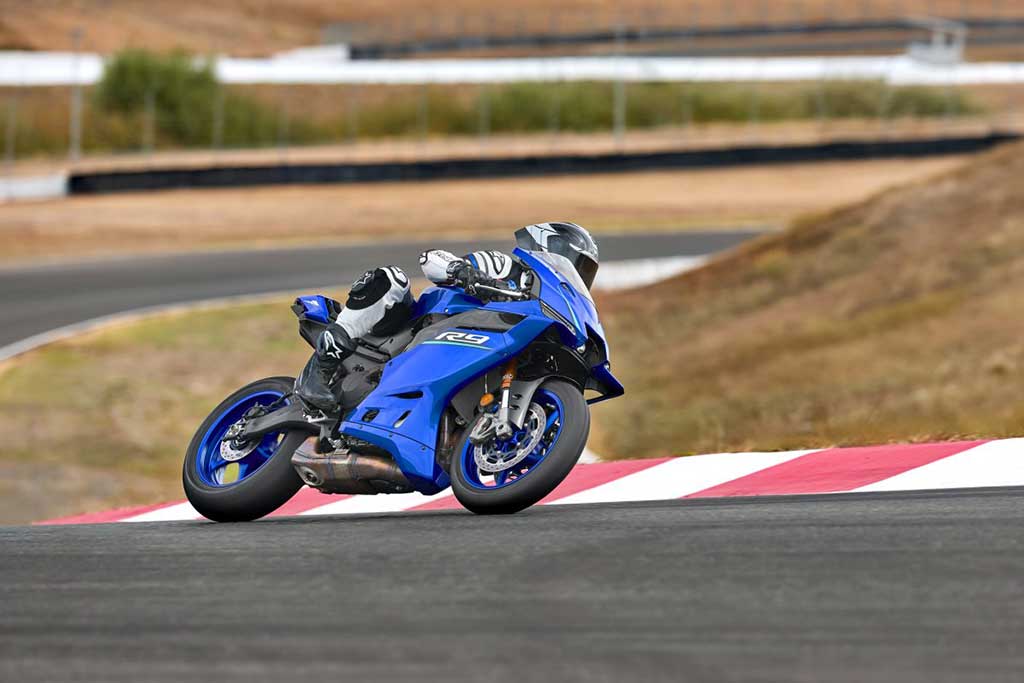
Brand new for 2026, the R9 fills the spot the R6 left behind, but the way it powers through the midrange and out of corners isn’t anything like the way the old inline-four did it. The R6 made you earn every bit of speed, while the R9 rewards you for trusting it. The whole bike is built around a Deltabox gravity-cast frame engineered specifically to shed weight, and the finished piece is lighter than any supersport aluminum frame Yamaha has ever produced. This bike also offers high-spec Brembo® Stylema calipers, aggressive R-Series styling, and modern touches like LED lighting and reworked aerodynamics. The YZF-R9 is what the next generation of the R Series looks like.
Out on the road, here’s the part that matters: the R9 isn’t trying to wring 13,000 rpm out of an 800cc mill just to feel quick, because it pulls hard from 6,000 rpm and just gets on with it. Slogging through downtown traffic isn’t the misery you’d expect from a bike that looks like this, and on a good corner the whole thing feels like somebody at Yamaha sat down and designed it specifically with that exact corner in mind.
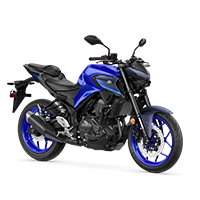
MT-03
Ideal for: A new rider who wants something that doesn't feel like a starter bike.
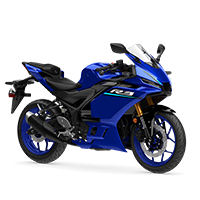
A lot of beginner bikes feel like they have training wheels. The MT-03 doesn’t, even though the 321cc parallel twin really is the smallest engine on this list and the 42 horsepower is the lowest output. The thing is, that’s genuinely all you need when you’re just starting out. You can ride to work on it, you can keep up with friends on a Sunday loop, and most importantly you can focus on learning how to ride properly. Throw in LED lighting, an inverted fork, and a weight of just 373 pounds, and what you’ve got is a remarkably responsive smaller bike.
The MT-03 also makes the case against jumping up too fast, which is something a lot of new riders end up regretting. Spend a year on something like this, maybe two, and you’ll get to know your local roads and learn your riding style.
XSR700
Ideal for: If you’re looking for a bike that will do both.
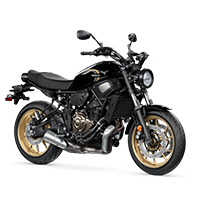
The XSR700 is the bike for somebody who wants their motorcycle to work in basically every situation they'd throw at it. Underneath its styling you’re getting the same CP2 you’ll find in the MT-07 and the Ténéré 700. It has 72 horsepower, a flat torque curve, and the kind of reliability you don't have to think about. The riding position is upright enough that an hour in stop-and go traffic isn’t going to wreck your back, and the styling is classic.
It’s your commuter, but perfect for a Saturday coffee run or taking a long ride through the back roads. The bike doesn't push you to be a particular kind of rider.
The Real Question
Ten bikes is admittedly a lot to sift through, but they narrow down faster than you’d think once you actually figure out what your week looks like. If your story is mostly the commute, the MT-07 and MT-03 are going to treat you as well as anything else out there. If you spend more time on back roads, you should be looking pretty hard at the R7 and the R9. If both matter to you about the same amount, that’s where the MT-09, Tracer 9, and XSR900 come in. If your weekends include leaving the pavement behind altogether, the Ténéré 700 and the World Raid are for you.
The thread that ties all ten of these bikes together is a Yamaha approach that consistently places the feel of a motorcycle ahead of how it sells. Backing that up is a fairly tight family of engine architectures; the CP2 twin and the CP3 triple chief among them. That’s the result of ten years of engineering decisions that have all been pointed at the same basic question: what makes a motorcycle worth riding every day?
Honestly, the only real way to figure out which Yamaha is the right one for you is to swing a leg over a few of them and see how each one feels. We run demos and events all over the country throughout the year, and you can stop in and ride every bike on this list (plus a few more we didn’t get to). Find an event near you on our 2026 Event Calendar.